












Blog
Regular Bread vs. Millet Bread: Which is Better?

Bread is one of the most convenient options for breakfast, lunch, or Dinner. It has been a staple food in many households. But people have been more aware of health and moving towards dietary options, and millet bread has been growing in demand because of its nutritional value. But the question remains: which one is actually better for your daily diet - regular (wheat) bread or millet bread?
This blog dives deep into the nutritional value, health benefits, and overall impact of both options to truly discover which one actually deserves a place in your pantry.
Understanding "Regular" Bread
Whenever we discuss “regular bread” in our home, we are often referring to two main categories: white bread and whole wheat bread.
1. White Bread:
White Bread is often made from refined wheat flour, and white bread has had its germ and bran removed during processing. This gives it a soft texture and longer shelf life, but it also strips away most of the fiber, vitamins, and minerals. What remains is largely simple carbohydrates, which can lead to rapid spikes in blood sugar.
- Pros: Familiar taste and texture, widely available, often fortified with some vitamins and iron.
- Cons: Low in fiber and nutrients, high glycemic index leading to blood sugar fluctuations, and can contribute to weight gain if consumed in excess.
2. Whole Wheat Bread:
Whole Wheat Bread is a step up from white bread. Whole wheat bread is made up of flour made from the entire wheat grain, including the bran, germ, and endosperm. This means it retains more of its natural fiber, protein, and nutrients.
- Pros: Higher in fiber than white bread, provides more vitamins and minerals (like B vitamins, iron, and magnesium), can help regulate blood sugar more effectively, and promotes digestive health.
- Cons: Still contains gluten (a concern for some), can sometimes be softer or less dense than ideal if not truly 100% whole wheat. Many commercial "whole wheat" breads contain a mix of refined and whole grain flours. Always check the ingredients list for "100% whole wheat” before purchasing.
The Millet Marvel: A Gluten-Free Powerhouse
Millet bread is made of ancient grains like ragi (finger millet), bajra (pearl millet), jowar (sorghum), and foxtail millet. It has been a dietary cornerstone in many parts of Africa and Asia for centuries. It's a small, round grain that belongs to the grass family and is naturally gluten-free.
- Naturally Gluten-Free: This is the main advantage for individuals with celiac disease, gluten sensitivity, or those looking to reduce their gluten intake. Millet bread provides a delicious and versatile alternative without the digestive distress often associated with gluten.
- Rich in Nutrients: Millet is packed with essential nutrients, including:
- Magnesium: Crucial for nerve and muscle function, blood sugar control, and blood pressure regulation.
- Phosphorus: Important for bone health, energy production, and cell repair.
- Manganese: Plays a role in bone development, metabolism, and antioxidant defense.
- Copper: Essential for iron absorption and red blood cell formation.
- B Vitamins: Supports energy metabolism and nerve function.
- High in Fiber: Millet bread boasts a significant amount of dietary fiber, both soluble and insoluble. This aids digestion, promotes satiety (making you feel full longer), helps manage blood sugar levels, and can contribute to lower cholesterol.
- Antioxidant Powerhouse: Millet contains various antioxidants, including phenolic compounds, which help combat oxidative stress and may reduce the risk of chronic diseases.
- Low Glycemic Index: Compared to refined grains, millet has a relatively low glycemic index, meaning it causes a slower, more gradual rise in blood sugar. This is beneficial for individuals managing diabetes and for overall energy stability.
- Protein Content: While not as high in protein as legumes, millet still contributes a good amount of plant-based protein, making it a valuable addition to vegetarian and vegan diets.
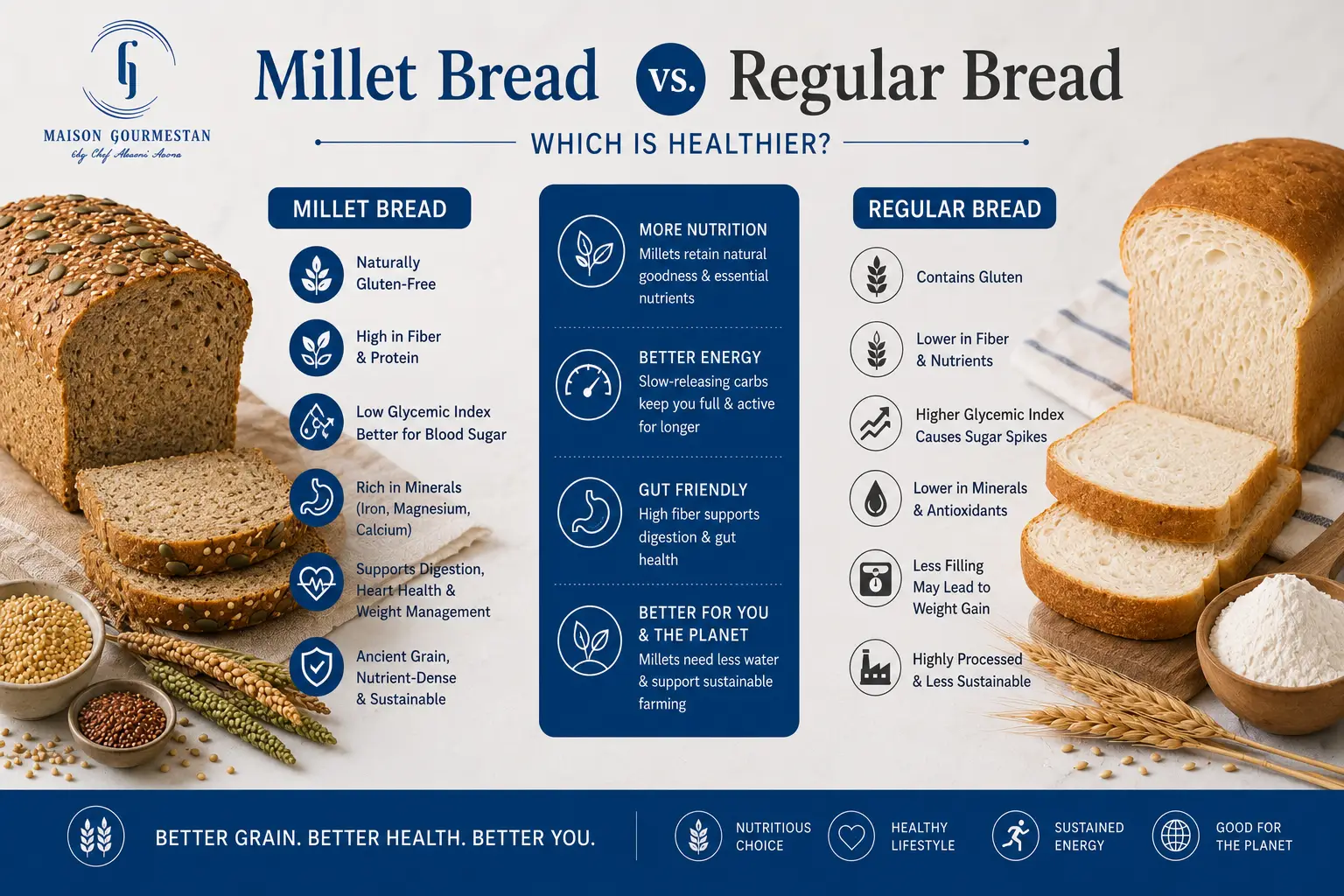
Millet Bread vs. Regular Bread: A Head-to-Head Comparison
Let's break down the key differences to help you make an informed choice:
Feature | White Bread | Whole Wheat Bread | Millet Bread |
Gluten Content | High | High | None (naturally gluten-free) |
Fiber Content | Low | Moderate to High | High |
Nutrient Density | Low (though often fortified) | Moderate to High (B vitamins, iron, magnesium) | High (magnesium, phosphorus, manganese, copper) |
Glycemic Index | High | Moderate | Low to Moderate |
Digestibility | Easy for most, but can cause spikes | Generally good, can be heavy for some | Easy, especially for those with gluten issues |
Taste & Texture | Soft, light, mild flavor | Heartier, sometimes denser, distinct wheat flavor | Nutty, slightly coarse texture, earthy flavor |
Allergens/ Sensitivities | Wheat, Gluten | Wheat, Gluten | None (unless cross-contaminated or other ingredients)
|
Health Benefits of Millet Bread V/s Regular Wheat Bread
Let’s have a look at the health benefits of Millet Breast V/s Regular Bread.
Health Benefit | Millet Bread | Regular Wheat Bread |
Digestion | High in fiber, supports better digestion and gut health | Contains fiber, helps support digestion and gut function |
Energy Levels | Low glycemic index (GI) provides stable energy and prevents sugar crashes | Moderate GI, provides steady energy when whole wheat is used |
Heart Health | Rich in magnesium and antioxidants, supports heart health | Contains essential nutrients that contribute to overall heart health |
Weight Management | Keeps you full longer, helps control appetite, and aids in weight loss | Provides satiety, but is less effective than millet in prolonged fullness |
Diabetes-Friendly | Slows glucose absorption, ideal for managing blood sugar levels | Better than refined bread, but still needs portion control |
Nutritional Value | Nutrient-dense with minerals like calcium, iron, and zinc | Good source of fiber, B vitamins, and essential nutrients |
Availability & Cost | Less common and can be slightly expensive | Widely available and affordable |
Versatility | Slightly denser texture, limited variety | Highly versatile and commonly used in daily meals
|
Who Should You Choose? Millet Breast or Regular Bread
Choose Regular Bread (especially whole wheat) if:
- You don't have gluten sensitivities or celiac disease.
- You enjoy the familiar taste and texture.
- You're looking for an affordable and widely available option (opt for 100% whole wheat for better nutrition).
Choose Millet Bread if:
- You are gluten-intolerant, have celiac disease, or are looking to reduce gluten in your diet.
- You want bread with a lower glycemic index for better blood sugar control.
- You're seeking a bread rich in a broader spectrum of minerals like magnesium and phosphorus.
- You prefer a bread with a higher fiber content to aid digestion and promote satiety.
- You enjoy exploring unique, nutty, and earthy flavors in your food.
- You're looking for an ancient grain with significant antioxidant benefits.
The Verdict: Millet Bread Often Tips the Scales
And the verdict is that whole wheat bread is certainly a healthier choice than refined white bread. But, Millet bread comes on the top list because of its superior nutrition quality, higher fiber content, lower glycemic index, and most significantly, its naturally gluten-free status.
However, the choice of the selection ultimately depends on an individual based on their individual dietary needs, preferences, and health goals. If gluten isn't an issue, you can go for whole wheat, because it remains a healthy choice. But if you're exploring alternatives, seeking specific nutritional benefits, or need a gluten-free option, millet bread is an excellent and wholesome option that is worth incorporating into your daily diet.