










Blog
Why Millets Are Better Than Refined Flour

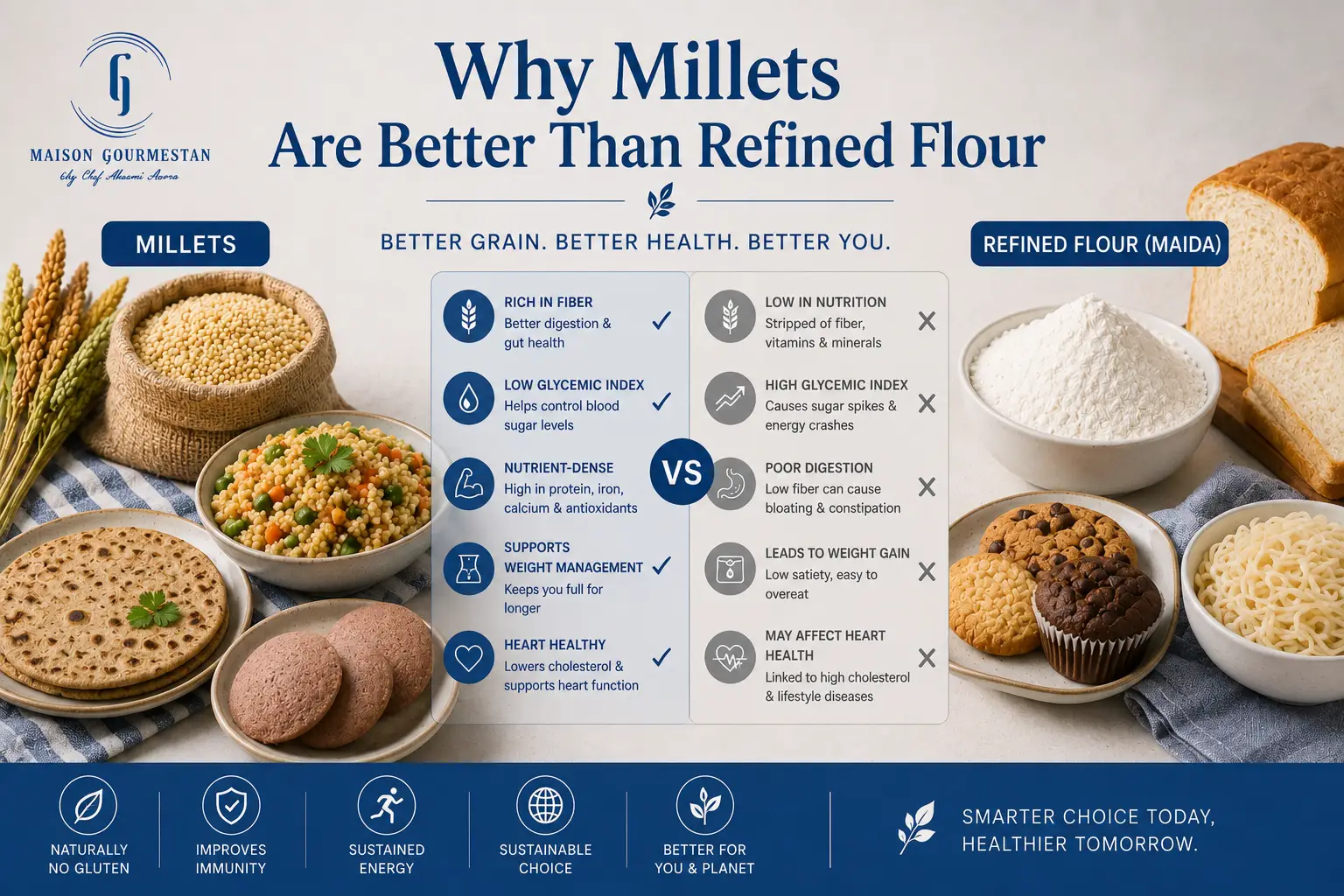
Refined Flour (Maida) has become one of the most popular ingredients in various foods and groceries, such as breads, biscuits, noodles, and many other packaged foods. Maida is very soft, inexpensive, and widely available in the market, but it lacks adequate nutritional value for overall health. If refined flour is used on a regular basis, it can lead to quick spikes in blood sugar and may contribute to long-term health issues when eaten in excess.
While, Millets have taken a front seat as a healthier option for many. These ancient grains are a healthier option for many because they are rich in fiber, protein, iron, and essential nutrients that support digestion, help control blood sugar, and keep you full for longer periods. Also, because millets have a very low glycemic index, they are an ideal option for weight management and overall health. As more and more people are getting health-conscious, they are moving towards millets, a healthy lifestyle option.
In this blog, let's see why millets are considered better than refined flour. Let’s break it down clearly.
What is Refined Flour?
Refined flour, widely known as maida, is made by processing whole wheat grains to remove the bran and germ. The remains are mainly the starchy endosperm.
This heavy processing strips away Fiber, Vitamins (especially B vitamins), Minerals like iron and magnesium, and Natural antioxidants. What we get after processing is fine, white flour that is used for baking, but it is nutritionally very low compared to whole grains.
What Are Millets?
Millets are very small ancient grains that are naturally No Gluten and minimally processed. They have full nutritional value, and mostly millets are taken in their whole form, ensuring better nutrition and overall health benefits.
The most common millets found in the market are Pearl Millet (Bajra), Finger Millet (Ragi), Foxtail Millet, and Sorghum (Jowar). They are rich in fiber, protein, and essential micronutrients, making them far more nutrient-dense than refined flour.
Comparison of Nutritional Value and Health Benefits of Millets & Refined Flour
1. Higher Nutritional Value:
Millets retain their natural nutrients because they are minimally processed. Millets provide - High dietary fiber, Iron, calcium, and magnesium, B-complex vitamins, and antioxidants. Refined flour - It has mostly carbohydrates, almost no fiber, and very low micronutrients Result - Refine Flour does not provide any calories or nutritional value, while millet gives balanced nutrition.2. Better for Blood Sugar Control:
One of the biggest differences lies in how they affect blood sugar levels. Millets have a low to medium glycemic index, meaning they release glucose slowly into the bloodstream. For example, Finger Millet (Ragi) and Foxtail Millet help maintain stable energy levels throughout the day. Refined flour, on the other hand, digests quickly, causes rapid sugar spikes, and leads to energy crashes and hunger cravings. Result - This again makes millets especially beneficial for people with diabetes or insulin resistance.3. High Fiber for Better Digestion:
Millets are rich in fiber, er which is essential for gut health Millets help to improve bowel movement, prevent constipation, support healthy gut bacteria, and help to detoxify the digestive system. Refined flour has very low fiber, which can slow digestion in an unhealthy way, and it often contributes to bloating and sluggish gut health. Result - Fiber-rich grains like Pearl Millet (Bajra) naturally support a healthier digestive system.4. Supports Weight Management:
Millets are more filling because of their fiber and protein content. Millets keep you full for longer, reduce unnecessary snacking, and help control calorie intake naturally. While refined flour foods like white bread, biscuits, and pastries are Easy to overeat, Low in satiety, and often high in sugar and fats Result - This makes millets a better choice for sustainable weight management.5. Naturally No Gluten and Gut-Friendly
Millets are naturally No Gluten, making them suitable for people with gluten intolerance or sensitivity. Popular options like Sorghum (Jowar) are widely used as wheat alternatives in No Gluten diets. Refined flour contains gluten and may cause bloating, discomfort in sensitive individuals, and inflammation in celiac patients.6. Rich in Antioxidants and Disease Prevention
Millets help to fight oxidative stress in the body because of the powerful antioxidants in them. The powerful antioxidants support heart health, reduce inflammation, provide better immunity, and aid in the slower aging of cells. Refined flour lacks these protective antioxidant compounds because processing removes the bran and germ, where most antioxidants are found.7. Sustained Energy Release:
Millets provide slow and steady energy For example:- Foxtail Millet provides long-lasting energy without crashes
- Pearl Millet (Bajra) supports stamina and endurance