












Blog
How to Store Artisan Sourdough Bread So It Stays Fresh

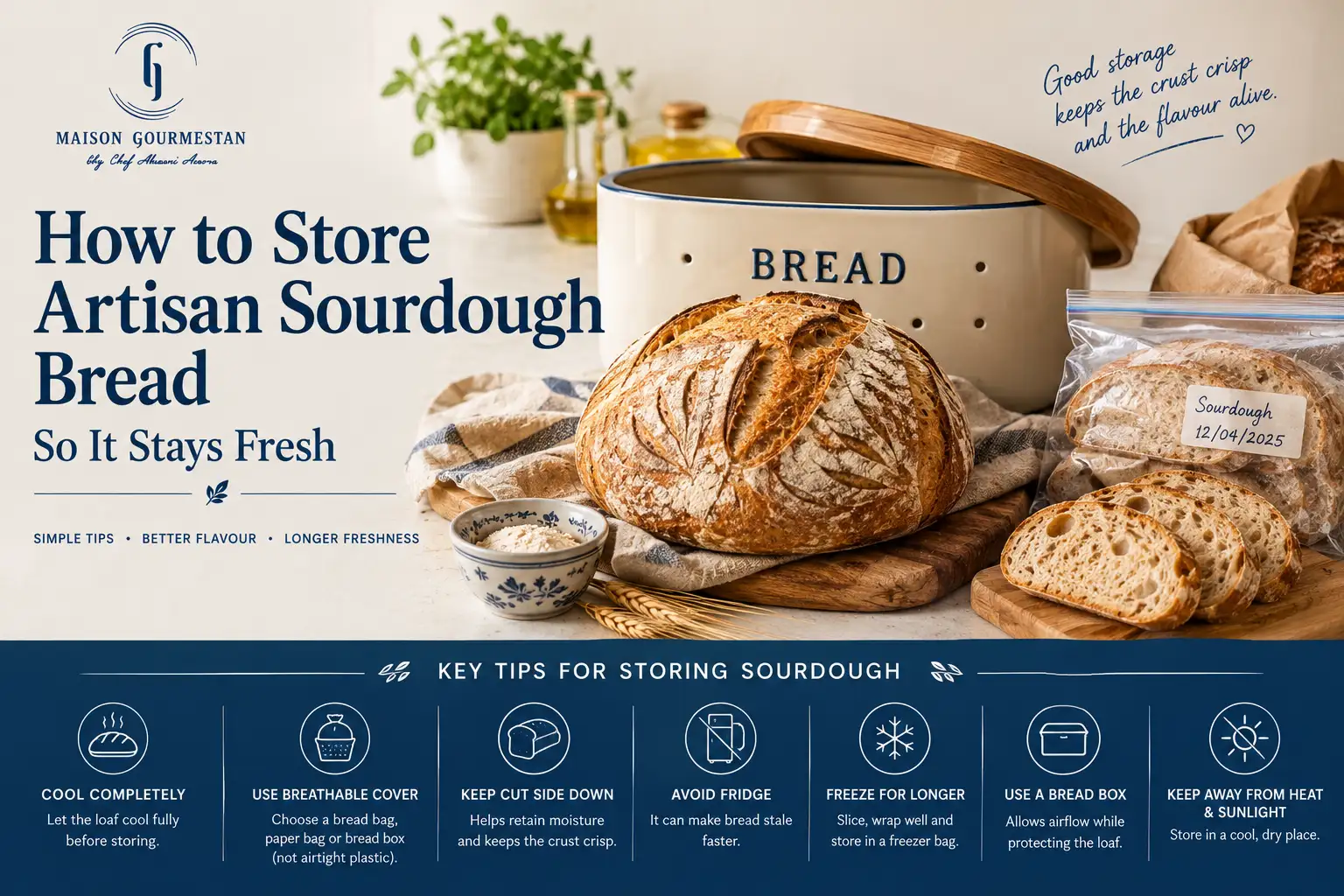
Freshly baked Artisan Sourdough Bread has its own charm and taste. This bread is crisp, with a golden crust, a chewy texture, and a slightly tangy flavour, which makes it different from ordinary packaged bread. And once you buy and bring that yummy loaf home, the most common question that comes to mind is: How do you keep sourdough fresh for longer?
The solution is not simply to store it in the refrigerator. In fact, the refrigerator makes bread stale faster by changing the texture of the starches. The best solution to store artisan sourdough depends on when you plan to eat it, how much bread you have left, and how long you want to preserve it.
In this blog, we will learn how to store your sourdough properly so you can enjoy its crust and texture for longer.
1. Let the Sourdough Bread Cool Completely Before Storing It
The first step to keep your sourdough bread fresh is to let it cool down completely before planning to store it.
Bread, when freshly baked, continues to release steam as it cools. If you wrap the warm loaf and keep it in a closed container while it is still warm, the trapped moisture can soften the crust and create a damp environment that creates mold.
Ideally, the best way is to keep the loaf on the wire rack and allow it to cool down completely. It takes time to cool down, depending on its size. Once it has cooled completely, the loaf will have had time to set, making the bread easier to slice and giving you that lovely sourdough texture.
2. Protect the Crust from Excess Moisture
The crust is one of the best things about artisan sourdough. But moisture is the enemy, and too much moisture can take away that crunchy crust.
Say “No” to storing sourdough bread in airtight plastic containers or sealed plastic bags at room temperature if you want to maintain a crisp crust. The trapped humidity can turn a beautifully crusty loaf soft and chewy.
Instead, use a bread bag, paper bag, or clean cotton bread bag that allows some airflow while protecting the loaf. A bread box is also the best option. Select one that provides proper ventilation rather than one that completely packs the bread inside.
3. Store the Cut Side Down for Better Freshness
If you have already sliced your sourdough, there is a simple trick that can help reduce moisture loss. Keep the loaf cut-side down on a clean cutting board or bread surface. This prevents the exposed crumb while allowing the crust to remain uncovered.
You can also cover only the cut portion with reusable beeswax wrap or another breathable bread-storage material. Try not to wrap the entire loaf tightly unless you are freezing it.
4. Avoid storing sourdough bread in the Refrigerator.
The fridge is the easiest place to store any food item, and people believe it's a logical place for bread too, but for sourdough, it is not the best option.
Cold temperatures cause the starches in bread to recrystallise more quickly, which can make the bread feel firm and stale. Storing artisan sourdough bread at room temperature is more advisable for short-term storage. If you live in very hot or humid weather, mold can easily grow. In that scenario, storing the bread in the fridge for several days is a better option.
5. How to Freeze Sourdough Bread for Long-Term Storage
Freezing is one of the best options to store the sourdough bread if you are planning to preserve it for a longer time. You can freeze the loaf whole, but slicing it before freezing is much more convenient. This allows you to take out only the amount you need.
How to freeze sourdough:
- First of all, allow the bread to cool down completely.
- Slice the loaf for convenience
- Wrap it tightly to protect it from freezer air.
- Place it inside a suitable freezer bag or airtight container.
- Remove as much excess air as possible.
- Label it with the date.
- Place it in the freezer.
Properly wrapped sourdough can maintain good quality in the freezer for several weeks to a few months.
6. Store Sourdough in a Bread Box
A good bread box is a simple way to keep sourdough fresh without sealing it away completely. It offers some protection from air while still allowing the loaf to breathe.
Choose a bread box with tiny ventilation holes or one designed to allow gentle airflow. This helps prevent the crust from becoming too dry while reducing the chance of moisture getting trapped inside.
Wooden and ceramic bread boxes are both ideal options, as are specially designed bread-storage containers. Just make sure the box is large enough to hold the loaf comfortably without squeezing it in. Also, don’t store too many loaves together. In warm or humid weather, trapped moisture can make the bread soft and encourage mold.
7. Keep Sourdough Away from Heat and Sunlight
It is very important how you store the sourdough. Keep your sourdough away from direct sunlight, ovens, stovetops, and other hot appliances. Excess heat can accelerate moisture loss and make the bread stale more quickly.
A cool and dry kitchen counter or pantry is usually a better location. However, don't store bread in a damp cupboard. Humidity can encourage mold growth.
8. Don't Store Sourdough Bread with Moist Foods
Sourdough bread is not recommended to be stored along with foods that release moisture. For example, storing bread beside freshly washed vegetables, uncovered fruit, or other damp ingredients can increase humidity around the loaf. Store your bread in a clean, dry, and well-ventilated place.
9. What If Your Sourdough Has Become Stale?
Please don’t throw it away immediately. Slightly stale sourdough bread can still be incredibly useful. You can make various options from it like French toast, croutons, breadcrumbs, garlic toast, bruschetta, bread pudding, grilled sandwiches, and stuffing.
You can also lightly sprinkle the loaf with water and refresh it briefly in the oven. This can help revive the crust and soften the interior. However, never try to revive bread that shows visible signs of mold. Once mould appears, it is safest to discard the loaf rather than simply cutting off the affected area.
How Long Can Artisan Sourdough Bread Be Stored?
The exact shelf life depends on the recipe, moisture content, storage conditions, and surrounding environment. Mostly, artisan sourdough tastes yummy when consumed within a few days and stored properly at room temperature. Freezing is the better option if you want to keep it for longer.
Remember that sourdough's natural fermentation may help it stay enjoyable longer than some conventional breads, but it does not make the loaf immune to mold or staleness.
The Best Storage Method for Sourdough Bread
For one to two days, keep your sourdough at room temperature in a breathable bread bag or bread box.
For several days, protect the cut surface and monitor the loaf for moisture and mold, especially in warm or humid conditions.
For long-term storage, slice and freeze the bread in an airtight freezer-safe package.
The key is to balance moisture and airflow. Too much exposure to air makes bread stale, while too much trapped moisture can soften the crust and encourage mold.
Final Verdict
Artisan Sourdough Bread needs to be properly stored to keep it fresh.
Concluding the entire thing, first is to let the loaf cool completely before storing it; store it in a breathable environment, protect the cut surface, avoid refrigeration when possible, and freeze it if you are not planning to use it for a long time.
With the right storage techniques, you can preserve its flavour, texture and character that made your sourdough special in the first place. And when the loaf does start to lose its freshness, give it a second life as toast, croutons, breadcrumbs or a delicious dessert rather than letting it go to waste.