






Blog
Ragi vs Wheat Flour: Which One Is Healthier?

In most households, Wheat Flour is the Staple Ingredient. There are many other flour options, such as Bajra, Jowar, Ragi, and Makai, available in the market. But the question is about choosing the right flour, which can have a significant impact on your overall health.
Of all, the two most commonly used flours in most households are ragi flour (finger millet) and wheat flour. Both types of flour give nutritional benefits, but they differ in terms of fibre content, gluten, protein, and suitability for different dietary needs.
In this blog, we will see a detailed comparison of both flours to help you decide which flour is best for your healthy lifestyle.
What Is Ragi Flour?
Ragi is an ancient whole grain that has been grown in India for many centuries. It is also known as finger millet. Ragi is a naturally gluten-free flour, and it is packed with essential nutrients for health. Ragi is rich in calcium, dietary fibre, iron, and antioxidants, making it a popular choice for health-conscious individuals.
What Is Wheat Flour?
Wheat flour is one of the world's most commonly used flours in many households. Whole wheat flour retains the bran and germ, making it a good source of fibre, protein, B vitamins, and minerals. However, it contains gluten, making it unsuitable for people with celiac disease or gluten intolerance.
Nutritional Comparison of Wheat Flour & Ragi Flour
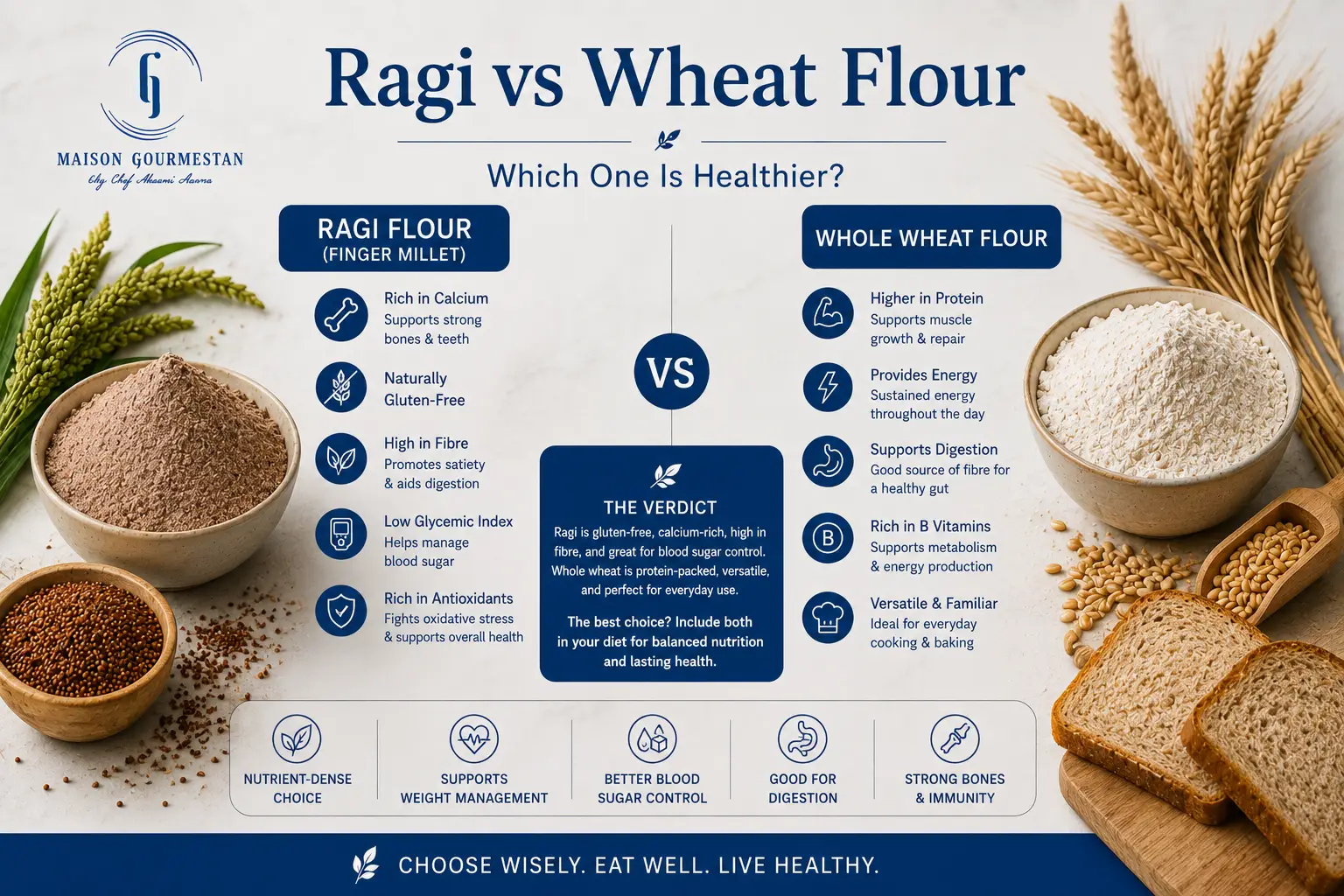
Nutrient | Ragi Flour | Whole Wheat Flour |
Gluten | Gluten-free | Contains gluten |
Fibre | High | Moderate |
Protein | Moderate | Higher |
Calcium | Very high | Low |
Iron | High | Moderate |
Glycemic Index | Lower | Moderate |
Antioxidants | Rich | Moderate |
Health Benefits of Ragi Flour
- Rich in Calcium - Ragi is one of the richest plant-based sources of calcium. It supports strong bones and teeth. It is the best flour option for growing children, older adults, and women.
- Naturally - Ragi is the best option for people with celiac disease or gluten sensitivity as an alternative to wheat flour.
- Supports Weight Management - It aids in weight management because of the high fibre content in it. It promotes satiety, helping you feel fuller for longer and reducing unnecessary snacking.
- Helps Control Blood Sugar - Ragi has a relatively low glycemic index, which may help regulate blood sugar levels when consumed as part of a balanced diet.
- Rich in Antioxidants - Ragi is rich in natural antioxidants,which help to combat oxidative stress and support overall health.
Health Benefits of Wheat Flour Protein-rich
Whole wheat flour contains more protein than ragi, making it beneficial for muscle maintenance and growth.
- Provides Energy - Wheat is rich in complex carbohydrates that supply sustained energy throughout the day.
- Supports Digestive Health - Whole wheat flour contains dietary fibre that promotes healthy digestion and regular bowel movements.
- Rich in B Vitamins - Whole wheat provides essential B vitamins that support metabolism and energy production.
Which Flour Is Better for Weight Loss - Ragi Flour or Wheat Flour?
Ragi Flour is often considered the best option for weight management or weight loss due to its higher fibre content and lower glycemic index. It keeps you feeling satisfied for longer, reducing hunger and calorie intake. However, portion control and an overall balanced diet remain key factors in achieving healthy weight loss.
Which Flour Is Better for Diabetes - Ragi Flour or Wheat Flour?
Ragi flour may be a better, healthier option for people with diabetes because it has a lower glycemic index and high fiber content, which helps in sugar absorption. That said, individual responses to foods vary, so it's important to monitor blood sugar levels and consult a healthcare professional or dietitian for personalized advice.
Which Flour Is Better for Bone Health - Ragi Flour or Wheat Flour?
Ragi clearly stands out due to its exceptionally high calcium content. Regular consumption in your daily diet can help to maintain strong bones and reduce the risk of calcium deficiency.
Taste and Cooking Uses of Ragi Flour or Wheat Flour
Ragi Flour is used in various foods like Rotis and flatbreads, Dosas, Idlis, Porridge, Pancakes, Cookies, and Healthy baked goods.
Whole Wheat Flour is used in various dishes like Chapatis, Bread, Parathas, Pizza dough, Cakes, Muffins, and Biscuits.
Many people also combine ragi and wheat flour to enjoy the nutritional benefits of both while achieving a softer texture.
Who Should Choose Ragi Flour?
Ragi Flour is the best option for
- People with celiac disease or gluten intolerance
- Individuals looking to enhance calcium intake
- People who are looking to manage blood sugar levels
- People aiming for weight management or weight loss
- Anyone seeking a nutrient-rich whole grain alternative
Who Should Choose Wheat Flour?
Whole wheat flour is suitable for
- Individuals without gluten sensitivity
- People looking for a higher-protein flour
- Those who enjoy traditional chapatis and baked goods
- Anyone seeking a versatile everyday flour
Final Verdict
Ragi Flour and Whole Wheat Flour both have their own unique benefits. Ragi Flour seems to be the best option because it is gluten-free, high in calcium, rich in fibre, and supportive of blood sugar management, while whole wheat flour offers more protein, versatility, and familiarity in everyday cooking.
Rather than choosing any one of them for health benefits, it is the best and wisest decision to include both the flours in your diet, as it can provide a wider range of nutrients and health benefits. If you have celiac disease or gluten sensitivity, ragi is the safer option. For everyone else, a balanced approach that includes a variety of whole grains can help support long-term health and wellness.